 Learning
 Local operating context
Schedules, people, learning activity, and day-to-day decisions stay grounded in the Center where the work happens.
Built for multi-Center organizations
Running multiple Centers should not require stitching together reports, spreadsheets, messages, and separate systems. Cognit gives network teams a connected view of operations while each Center keeps the context that makes its work local.
Network overview
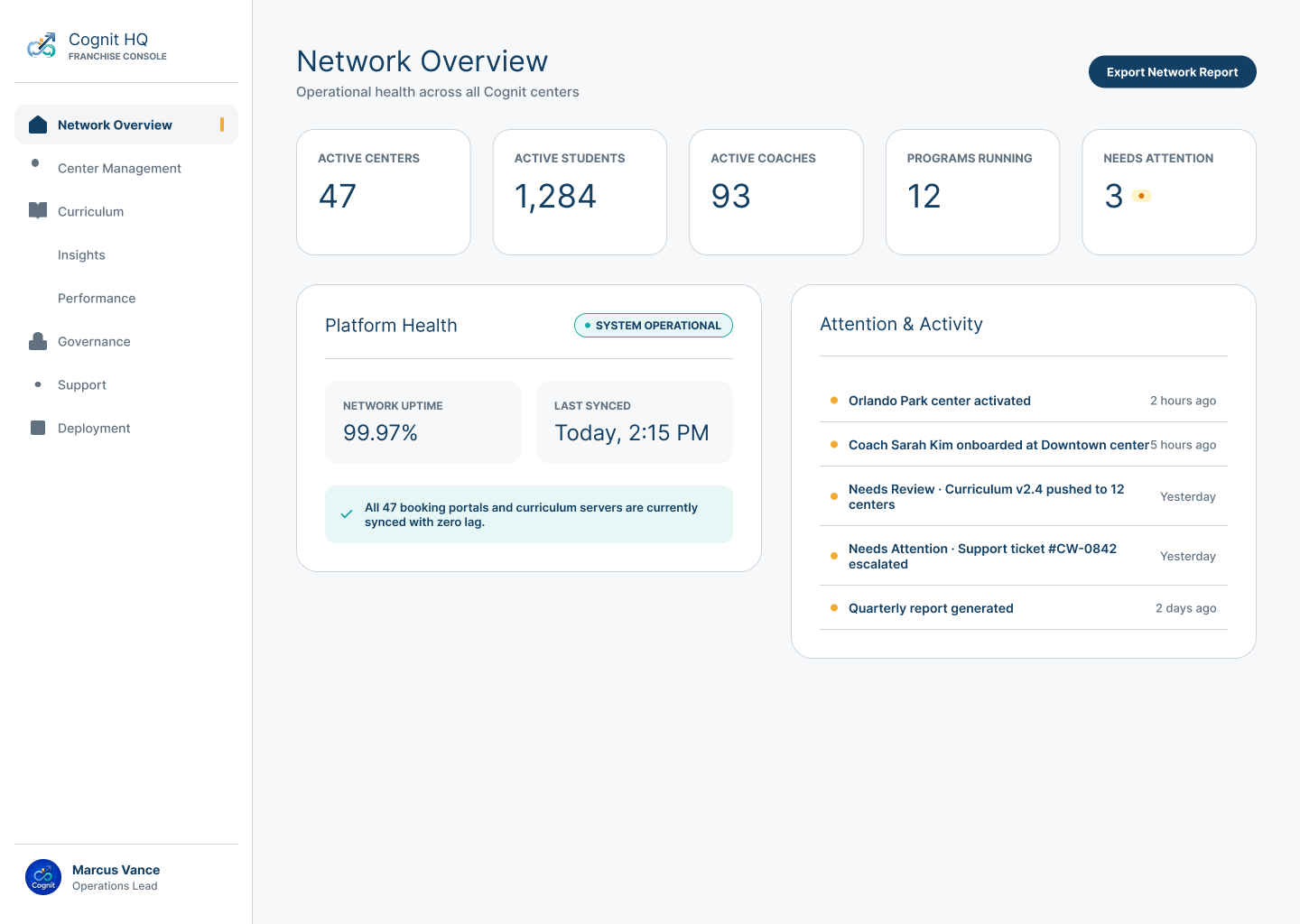
Cognit HQ brings network health, Center activity, programs, and items needing attention into one operational view. Teams can understand the organization without assembling the picture by hand.
For franchise and other multi-location learning organizations, that visibility connects network oversight with local Center responsibility.
Center lifecycle
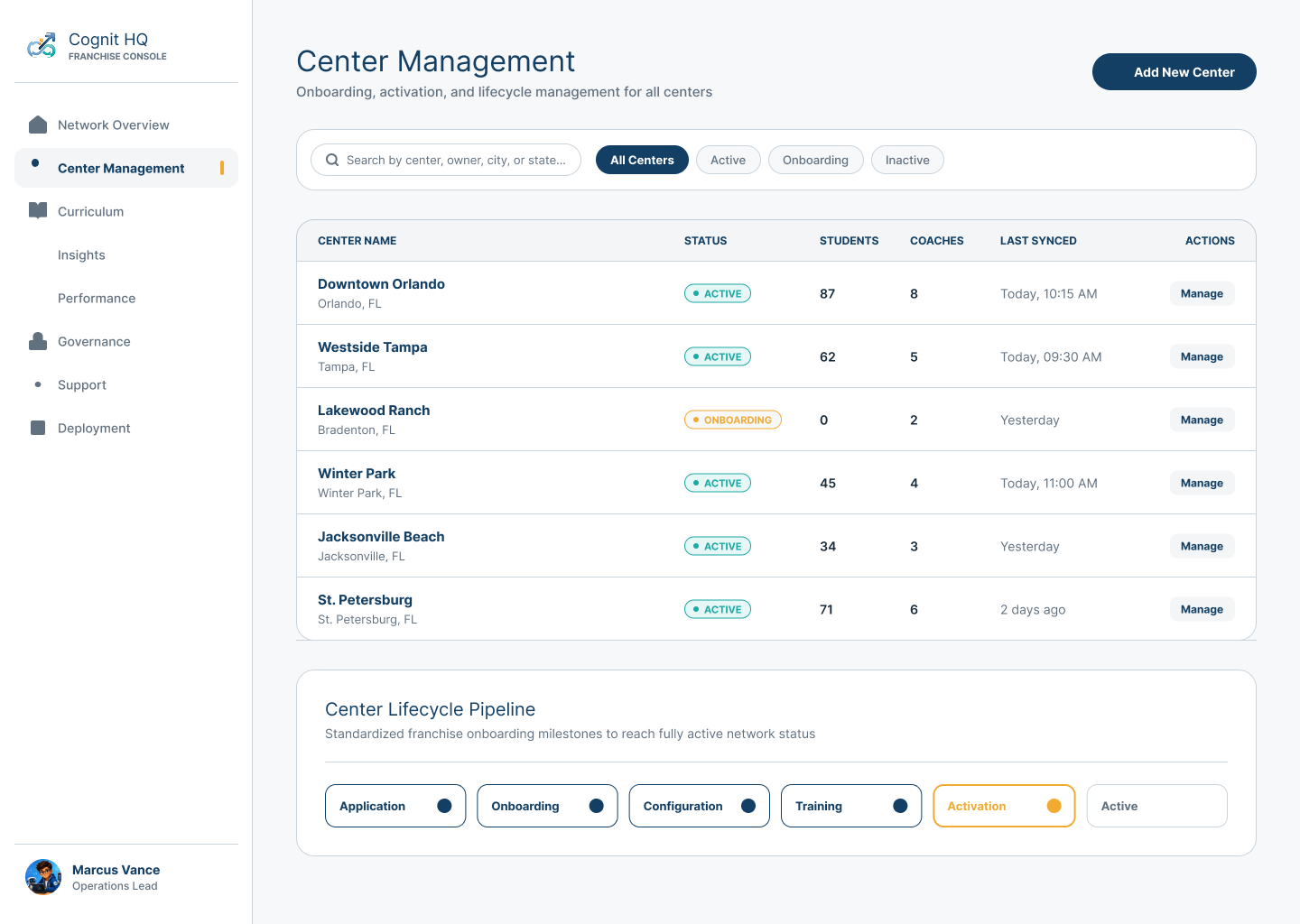
A Network needs to understand, support, and govern multiple Centers. Cognit makes each Center’s operating stage and status visible while keeping ownership and local context attached to the location where the work happens.
Curriculum coordination
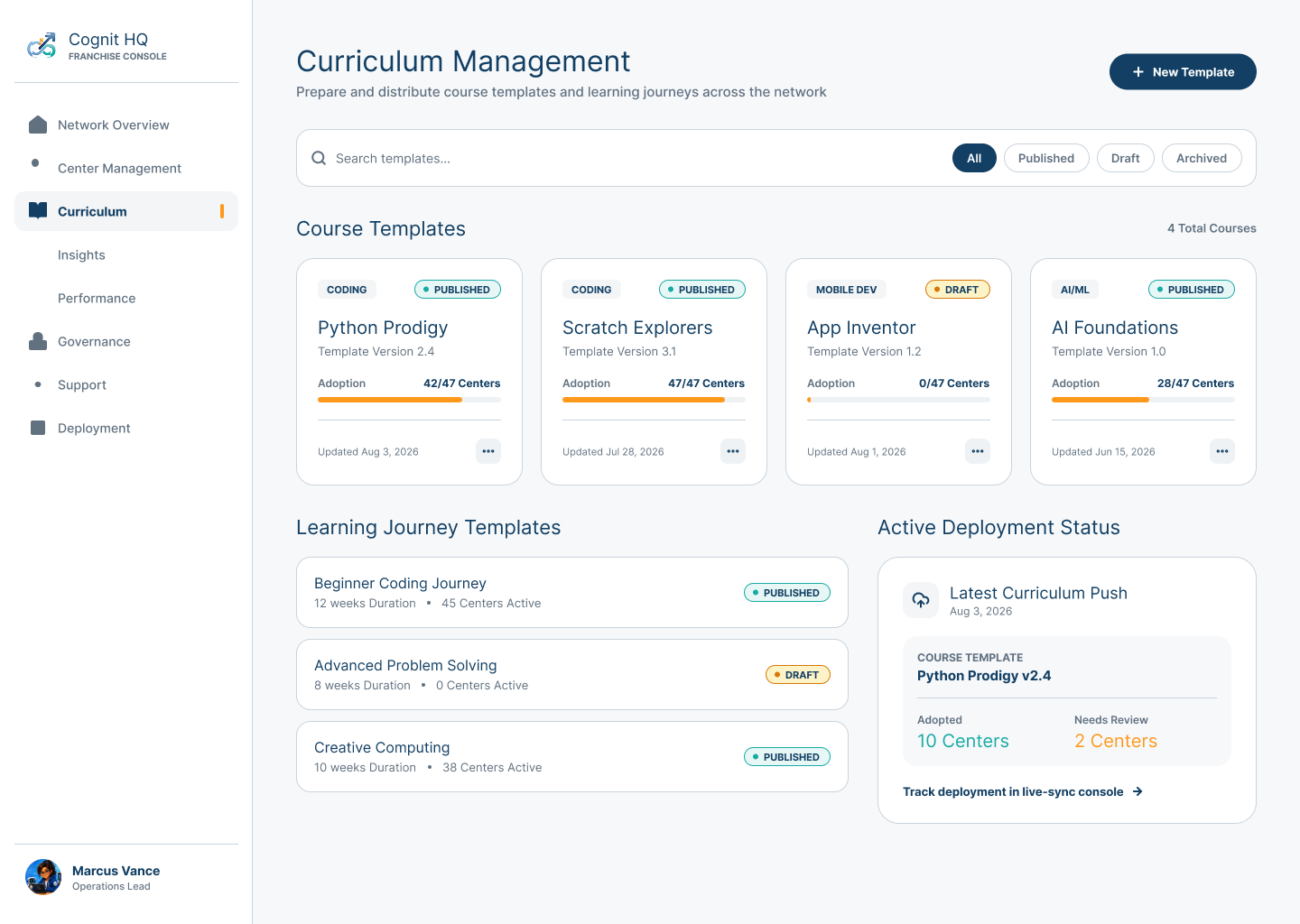
HQ can prepare course templates and learning journeys, understand what is published or still being adopted, and coordinate common direction across locations.
Shared standards do not require identical local operations. Centers continue to teach and operate in their own context.
Operational insights
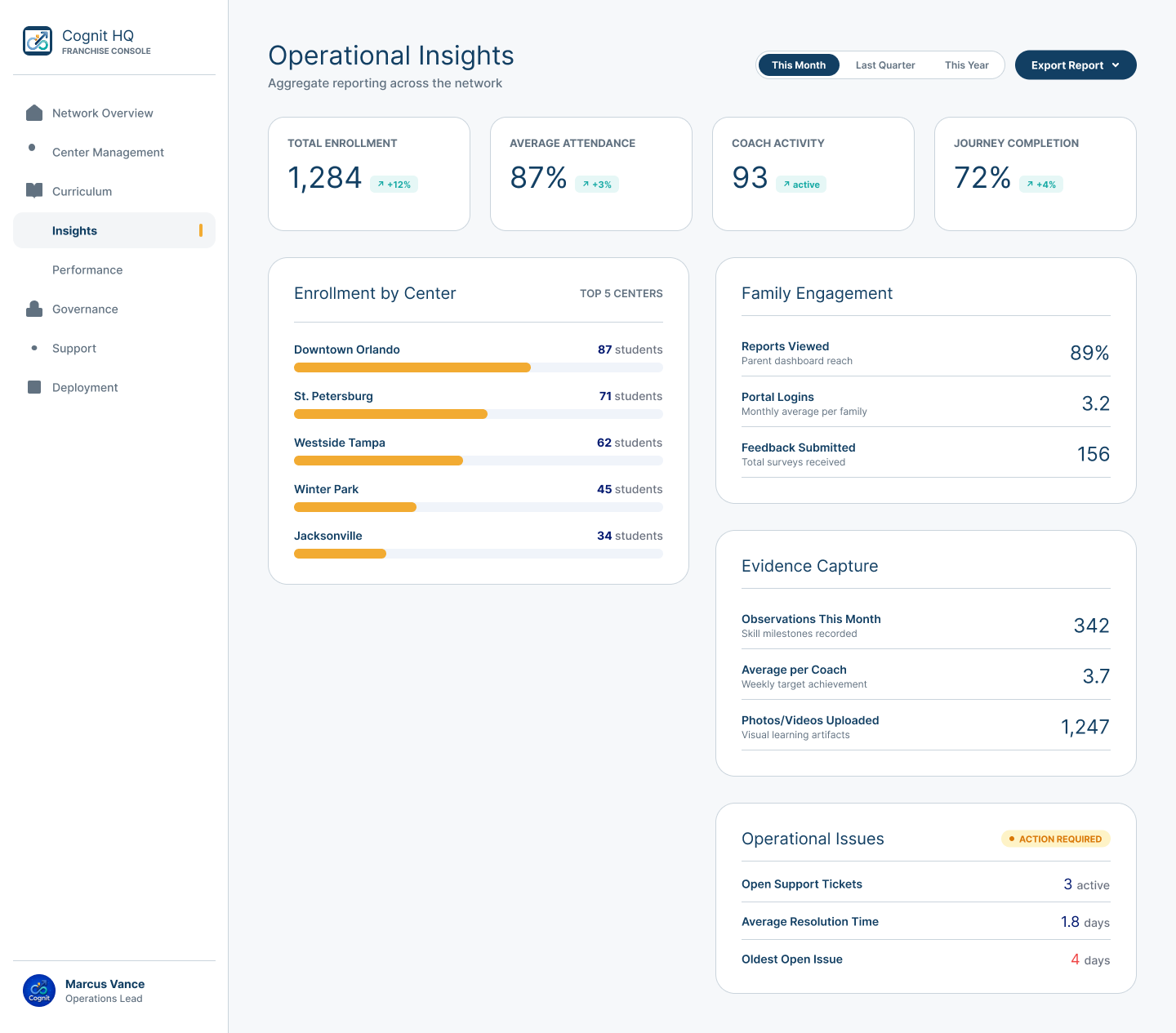
Network teams can review enrollment, attendance, Coach activity, journey completion, Family engagement, evidence capture, and operational issues without losing the Center context behind each signal.
Cognit helps HQ understand what is changing and where a closer look may be useful.
Performance and exceptions
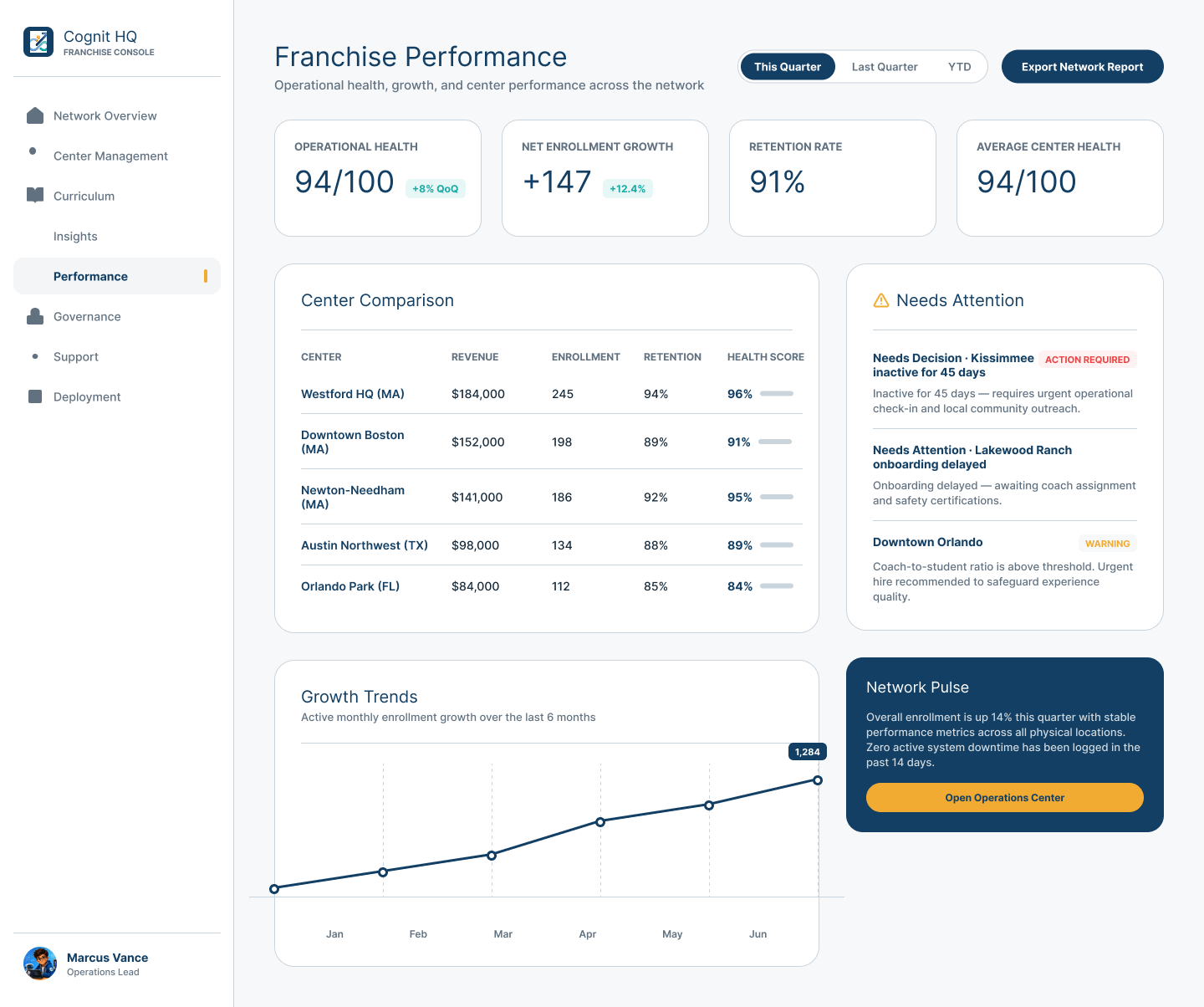
Cognit helps network teams compare operating health, notice differences between locations, follow trends, and identify Centers that may need support.
Routine work should stay quiet. Meaningful exceptions should surface so attention can move where judgment or support can help.
Governance
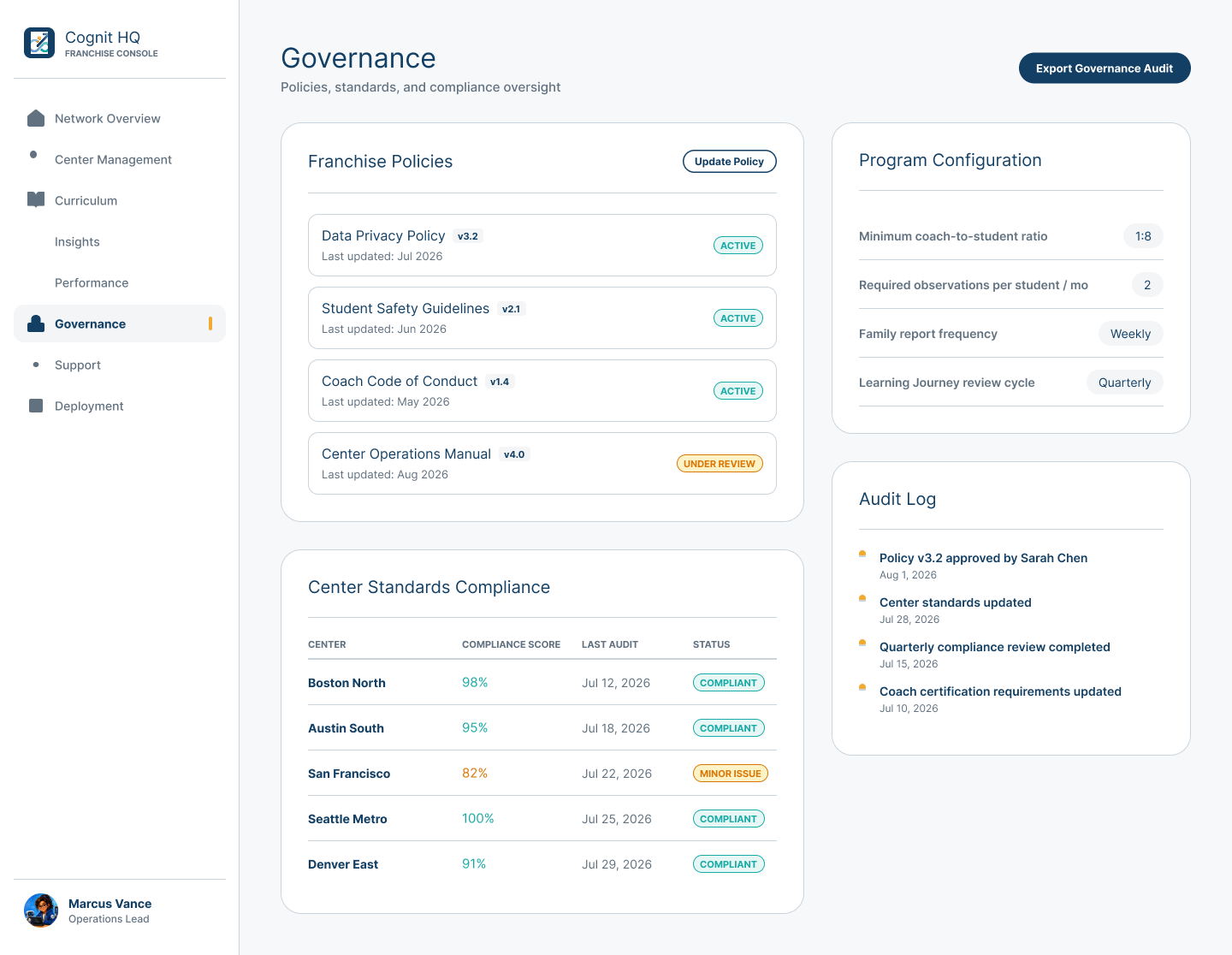
Policies, operating standards, program configuration, review cycles, and Center-level status can remain visible to the teams responsible for network consistency.
This is operational governance: a way to coordinate expectations and reviews without making regulatory or certification claims.
Local context, shared direction
Network visibility and local responsibility can work together. Shared curriculum and operating expectations coexist with the context each location needs.
Schedules, people, learning activity, and day-to-day decisions stay grounded in the Center where the work happens.
Curriculum direction, operating expectations, and governance remain visible without creating one undifferentiated dashboard.
Granted visibility
Network structure describes how Centers relate to the organization. Access determines which Centers and information a person can actually see.
Being part of HQ does not automatically expose every Student, Family, Coach, or local record.
People see the information appropriate to their responsibility and the Centers they have been given access to.
Multi-Center continuity
Learning, operations, progress, and communication remain connected as the organization grows across Centers.
Shared learning direction stays connected to the work happening inside each Center.
Network teams understand operating health without replacing local Center responsibility.
Evidence and updates move to the people who need context for the next decision.
Deployment fit
Cognit Learning can support network conversations through a managed SaaS model or a coordinated Managed Hosted deployment.
A Cognit-managed cloud service for organizations that want a coordinated standard environment.
A dedicated deployment conversation for organizations that need additional environmental or integration planning.
Explore the HQ perspective or talk with us about how Cognit Learning could fit your organization.